Today I learned...
~ How awesome authors can be. Nicholas decided to write to one of the author's of a book he just finished reading, Silver Dragon Codex. She, the fabulous Ree Soesbee, responded within hours. How cool, and gratifying, is that?
~ How valuable self-care is. After a month (or perhaps more) of living with a stiff neck, and years since a massage, I finally took some time and booked myself in for one. All the kinks aren't quite out yet, but I haven't had this range of motion for a while.
~ That my two-year-old wants to read to me! Astrin pulled out a fairy book Jaelyn brought home from the library, opened it up to show me the pictures and words, and told me about how the fairies and "man" (Jack Frost) were mad. Yes, everyone in that story was mad, even if they were smiling. So cute.
~ Where Chris had hidden all the board games so that Astrin won't pull them out and toss all the pieces around the living room.
~ That Jaelyn has gotten really good at math. I mean really good. She shared her strategy for subtracting in her head, which, if I understood correctly, means getting one of the numbers to ten, and then subtracting from 10. I remember having a similar conversation with Nicholas when he was in grade one, and it made my head spin. And I do like numbers, really.
~ That it can be difficult to find simple answers to some questions, like "what is alum" as we embark on a science experiment to create our own crystals. I'm disappointed that I can't explain why mixing alum and water makes crystals. It might be one of those questions that gets passed Papa's way. But I could regurgitate all it's uses, from cleaning water to making bread "whiter" and pickles crisper. The next time I bite into a crisp store-bought pickle, I'll wonder if I'm eating crystals!
~ Where I might go to find more answers to the question, "what do I do with this toddler while I try to focus on the other two children's work?" Check out Christopherus Homeschool Resources' conversation board. Check out topic #3.
Showing posts with label math. Show all posts
Showing posts with label math. Show all posts
Wednesday, 27 March 2013

Monday, 25 February 2013
Division
While the moment looked quite ordinary, it felt momentous to me. Today, my son took his first step to mastering division.
I don't know why I felt apprehensive as I sat on the floor of his room waiting for him to finish up a language lesson he was working on. Perhaps it was because I remembered division from when I was in school. In fact, forget division - what I likely remember most acutely was my difficulty with doing any math operation fast. We would have timed tests that would give me fits. I didn't know my math facts cold, and it seemed that my brain froze when I was up against the clock. For some reason, I didn't develop a dislike of math and went on to do algebra, geometry, trigonometry and calculus quite well. I just disliked doing 100 questions in 5 minutes or less.
Anyway, while multiplication felt quite intuitive to me, there was something about division that seemed a little more daunting. My default is to figure out the answer a division problem by using multiplication. But I wasn't sure that logic would help my son to understand the concept.
I decided that I would try a Waldorf approach to introducing division. My beloved book, The Waldorf Book of Poetry, had a poem that I read to my son. It is intended to be read in a classroom, where the students are the "manipulatives" that move around to form different group sizes and demonstrate multiplication and division. Since we didn't have 12 students in our classroom, we simply used some beads and moved them with our hands into different group sizes.
After that, I read Nicholas a story that illustrates how to do division from Understanding Waldorf Education. It describes what each of the three numbers in a long division problem mean. It is simple, yet brilliant.
Lastly, we tried some division problems on our own. And he did it! In fact, the page of division he did today was completed faster than any other math page he has done this year. I was amazed. Rationally, I know that he has been doing division in his head for about a year now. He's had exposure through simple division in verbal problems we would do while doing dishes, as well as solving equations in his Life of Fred books. He tends to naturally pick up new concepts.
Still, even with all that...Nicholas' achievement today feels special.
I don't know why I felt apprehensive as I sat on the floor of his room waiting for him to finish up a language lesson he was working on. Perhaps it was because I remembered division from when I was in school. In fact, forget division - what I likely remember most acutely was my difficulty with doing any math operation fast. We would have timed tests that would give me fits. I didn't know my math facts cold, and it seemed that my brain froze when I was up against the clock. For some reason, I didn't develop a dislike of math and went on to do algebra, geometry, trigonometry and calculus quite well. I just disliked doing 100 questions in 5 minutes or less.
Anyway, while multiplication felt quite intuitive to me, there was something about division that seemed a little more daunting. My default is to figure out the answer a division problem by using multiplication. But I wasn't sure that logic would help my son to understand the concept.
I decided that I would try a Waldorf approach to introducing division. My beloved book, The Waldorf Book of Poetry, had a poem that I read to my son. It is intended to be read in a classroom, where the students are the "manipulatives" that move around to form different group sizes and demonstrate multiplication and division. Since we didn't have 12 students in our classroom, we simply used some beads and moved them with our hands into different group sizes.
After that, I read Nicholas a story that illustrates how to do division from Understanding Waldorf Education. It describes what each of the three numbers in a long division problem mean. It is simple, yet brilliant.
Lastly, we tried some division problems on our own. And he did it! In fact, the page of division he did today was completed faster than any other math page he has done this year. I was amazed. Rationally, I know that he has been doing division in his head for about a year now. He's had exposure through simple division in verbal problems we would do while doing dishes, as well as solving equations in his Life of Fred books. He tends to naturally pick up new concepts.
Still, even with all that...Nicholas' achievement today feels special.
Monday, 14 January 2013
A peaceful compromise
Here we were today, all four of us gathered in the bathroom as we finished getting ready for the day - teeth brushed, hair combed, me wrestling with a little one's diaper as she tried to climb on the potty. The children were about to start their quiet time work - no morning walk today as it really is too frigid (-30C).
I asked Nicholas what he would work on today. He mentioned he would work on Language Lessons, he would like to play a math game, and he wasn't sure what his writing work would look like. I mentioned looking at the next Writing Strands lesson, for he might like it - he was to write about a friend. He got a look of fear in his eyes, then brightened up. "What if I made a game?"
I hesitated, feeling my gut twist up a bit and my mind revving its engine. How was a game writing? But I resisted the urge to blurt out the question and responded curiously instead with, "What kind of game?"
"I don't know....what about a math game?" Nicholas answered.
Still not sure how he was tying writing into this game, I asked, "What will you write about?"
"The instructions. And I'll need to make cards with the questions on them, and the cards will tell the person how many spaces to move if they get the question right. And I'll need to make a game board." Nicholas replied, his voice sounding more excited and his eyes sparkling just a bit more as he continued to formulate what his game would look like.
Both of us satisfied, he went off to his room to start his quiet time work while I finished getting Astrin ready for the day and headed downstairs to help Jaelyn.
Later, Nicholas brings down the instructions he's written. I ask him how he would like us to go through the words he had trouble spelling. This time, he would like to go through it together, admitting that there were a few words he had trouble with. We go through spelling and punctuation, have a few giggles along the way, then he heads back upstairs to make the cards and board.
Peace ensues. What a great feeling.


I asked Nicholas what he would work on today. He mentioned he would work on Language Lessons, he would like to play a math game, and he wasn't sure what his writing work would look like. I mentioned looking at the next Writing Strands lesson, for he might like it - he was to write about a friend. He got a look of fear in his eyes, then brightened up. "What if I made a game?"
I hesitated, feeling my gut twist up a bit and my mind revving its engine. How was a game writing? But I resisted the urge to blurt out the question and responded curiously instead with, "What kind of game?"
"I don't know....what about a math game?" Nicholas answered.
Still not sure how he was tying writing into this game, I asked, "What will you write about?"
"The instructions. And I'll need to make cards with the questions on them, and the cards will tell the person how many spaces to move if they get the question right. And I'll need to make a game board." Nicholas replied, his voice sounding more excited and his eyes sparkling just a bit more as he continued to formulate what his game would look like.
Both of us satisfied, he went off to his room to start his quiet time work while I finished getting Astrin ready for the day and headed downstairs to help Jaelyn.
Later, Nicholas brings down the instructions he's written. I ask him how he would like us to go through the words he had trouble spelling. This time, he would like to go through it together, admitting that there were a few words he had trouble with. We go through spelling and punctuation, have a few giggles along the way, then he heads back upstairs to make the cards and board.
Peace ensues. What a great feeling.

Thursday, 10 January 2013
Adjusting routines
I cherish our routines, because it gives all of us something to look
forward to - we know what's going to happen next in our days. Upon entering January, though, I felt compelled to look hard at our homeschooling routine. Some of the dynamics in our family were changing - having a potential non-napping toddler hanging around during our quiet time, for starters. Plus, despite it looking like this winter will be long, long, long, I really want to commit to getting us all out and discovering the beauty of a crisp winter day. So we're going to tweak things and see how they go.
Our first tweak is to go for a family walk once everyone is ready to face the day. We've gone every day this week, and I've been delightfully surprised at all there is to discover in this neighbourhood we've called home for the past three years. Tuesday's discovery was a little band of brightly plumed birds, and today's was a mysterious coniferous tree that is one-of-a-kind for our part of town.

The second tweak is to do our quiet schoolwork in the morning instead of the afternoon. This change was mainly because Astrin is showing signs of outgrowing her afternoon naps and there tend to be more places to go or things to do in the afternoon than in the morning.
The third tweak is to our approach to math. We were originally using workbooks to go through math concepts. While Jaelyn is happily zipping through her book, Nicholas has resisted every step of the way. He is a bright boy and understands the concepts, and while he complained that his class at school progressed through math too slow, he also complained that we were going to fast. He's insisted several times that the grade fours were absolutely not going through concepts that we were.
I don't feel I have the emotional energy to prod, negotiate, and so forth, yet I do think that repetition and practice is needed to "do" math efficiently. So we're using several different tools to get in the repetition I want, in a way that suits Nicholas. And where did these tools come from? They were rediscovered while we were cleaning our basement. One is called "Math Factory" and the other is called "Three Steps Ahead" and we purchased them when Nicholas was a newborn - some salesperson came to prey on us as new, tired, naive parents and convinced us that our child would have difficulty in school if we didn't purchase them. And what do you know - almost ten years after we purchased them, we're finally using them!
Our first tweak is to go for a family walk once everyone is ready to face the day. We've gone every day this week, and I've been delightfully surprised at all there is to discover in this neighbourhood we've called home for the past three years. Tuesday's discovery was a little band of brightly plumed birds, and today's was a mysterious coniferous tree that is one-of-a-kind for our part of town.
The second tweak is to do our quiet schoolwork in the morning instead of the afternoon. This change was mainly because Astrin is showing signs of outgrowing her afternoon naps and there tend to be more places to go or things to do in the afternoon than in the morning.
The third tweak is to our approach to math. We were originally using workbooks to go through math concepts. While Jaelyn is happily zipping through her book, Nicholas has resisted every step of the way. He is a bright boy and understands the concepts, and while he complained that his class at school progressed through math too slow, he also complained that we were going to fast. He's insisted several times that the grade fours were absolutely not going through concepts that we were.
I don't feel I have the emotional energy to prod, negotiate, and so forth, yet I do think that repetition and practice is needed to "do" math efficiently. So we're using several different tools to get in the repetition I want, in a way that suits Nicholas. And where did these tools come from? They were rediscovered while we were cleaning our basement. One is called "Math Factory" and the other is called "Three Steps Ahead" and we purchased them when Nicholas was a newborn - some salesperson came to prey on us as new, tired, naive parents and convinced us that our child would have difficulty in school if we didn't purchase them. And what do you know - almost ten years after we purchased them, we're finally using them!
Tuesday, 27 November 2012
Runs and sets
To carry on with the card-playing post from yesterday, I'd like to share another card game that is near and dear to my heart. Runs and Sets is a game I learned to play at my grandparents' house, and was a ritual every time we visited. Now that both my grandparents have passed on, and visits with my own parents are not all-weekend affairs (we simply do a 10-minute drive home to tuck children into bed), it is a very rare treat indeed that we play Runs and Sets. I hope to get a couple of games in this holiday season, though, and perhaps your family would like to try it out too. Here's how to play:
What is involved:
- The game works best with at least 3 players.
- Have one deck of cards for every two players - round up if you have an odd number of players. So, if you have 4 players, you need two decks. If you have 5 players, you need 3 decks. Remove jokers.
- Paper and pencil for keeping score
- Optional: Each player chips in 15 cents to the pot.
How to play:
- There are 7 rounds in this game, involving different combinations of runs and sets:
- Round 1: 2 Sets
- Round 2: 1 Set, 1 Run
- Round 3: 2 Runs
- Round 4: 2 Sets, 1 Run
- Round 5: 1 Set, 2 Runs
- Round 6: 3 Sets
- Round 7: 3 Runs
- All players are trying to put together the combination of cards for the same round - sets are at least 3 cards with the same number; runs are at least 4 cards in a row of the same suit.
- Each player is dealt 11 cards for every round. Then the top card from the deck is turned up (start of the discard pile).
- Each player takes turns (clockwise) and can either take the card from the deck or from the discard pile.
- If a player would like a card that is discarded, but it is not his/her turn, it may be bought. To buy a card, the player declares they would like to buy. If no other player before them wants the card, the player takes the top discard card, plus 2 cards off the deck. 2 buys are allowed per round - the maximum number of cards a player can hold in one round is 17. Once the round is done, the number of buys resets, and all players can buy twice in the next and all subsequent rounds.
- Once a player has completed the combination, the cards in the combination are laid down in the space in front of the player. So, if the combination is 2 sets, both sets must be laid down. Then the player can add to other players' laid-down combinations.
- A player cannot lay down more than what is required in the combination. For example, if a player has gathered 3 sets, but the requirement is only 2 sets, only 2 sets can be laid down.
- There are no wild cards.
- Play continues until a player can go out without putting a card in the discard pile - the last card in the player's hand must be laid on a player's laid-down combination. This often means that a player is holding a "play card" (a card that plays somewhere on the table) and must draw a play card. While the player is holding a play card they are "on the pot". This must be announced by the player.
- A play card can not be discarded, even if the player has not laid down. It must be held in the player's hand until he/she can lay down, or the card is no longer a play card (i.e. someone else played the play card).
- When a player goes out, all others must count the points in their hand. Face cards are worth 10, all others are worth their number value. Aces are low and worth 1 point. If you are playing with money, the player who went out gets 5 cents.
- Play then moves to the next round. For example, once round 1 is done, all players would then move on to round 2, even if they did not lay down.
- At the end of the game, the player with the lowest number of points wins (and gets what is left of the money - the pot).
Monday, 26 November 2012
Sticks
After having my husband unexpectedly home for most of last week, combined with a seemingly endless number of errands to be run, I found myself waking up to today a little disoriented. Nothing on the calendar. No field trips planned. A week that is pretty much an empty slate.
I was also expecting the children to sleep a little later than normal. After a sleepover this weekend and a late night watching the last CFL game of the season, I thought they would be loving the chance to catch up on some much-needed rest. So, imagine my surprise when everyone was up at about the same time! A little grumpy, a little restless, a little mischievous. And me a little groggy.
We got into our groove this afternoon. After finishing up our little bit of schoolwork and reading about Zeus, we settled in to some games. The old-fashioned kind. We played Sorry and then we played a new, homemade favorite, which was a gift a couple of years ago. It's a card game called Sticks.
Sticks is aptly named, as the game is simply a few decks of cards and a bag full of sticks. Each stick has instructions describing what you will be collecting for the hand - examples are 2 sets of 5; the ace, king, queen of hearts; 4 runs of 3. If you can collect what is on your stick, you lay down and then try to get rid of the rest of your cards by laying down other runs or sets of 3 or more, or adding on to runs and sets laid down by others. If you can't you try again the next hand (and the next and the next) until you get it.
It's a fun game that works best with three or more people, and usually with those with larger hands to hold all those cards (each player is dealt 15 cards to begin with!) That being said, Jaelyn's little 6-year-old hands are more than capable of playing - she just puts the cards she no longer needs face-down on the table until she is ready to show what was on her stick.


I was also expecting the children to sleep a little later than normal. After a sleepover this weekend and a late night watching the last CFL game of the season, I thought they would be loving the chance to catch up on some much-needed rest. So, imagine my surprise when everyone was up at about the same time! A little grumpy, a little restless, a little mischievous. And me a little groggy.
We got into our groove this afternoon. After finishing up our little bit of schoolwork and reading about Zeus, we settled in to some games. The old-fashioned kind. We played Sorry and then we played a new, homemade favorite, which was a gift a couple of years ago. It's a card game called Sticks.
Sticks is aptly named, as the game is simply a few decks of cards and a bag full of sticks. Each stick has instructions describing what you will be collecting for the hand - examples are 2 sets of 5; the ace, king, queen of hearts; 4 runs of 3. If you can collect what is on your stick, you lay down and then try to get rid of the rest of your cards by laying down other runs or sets of 3 or more, or adding on to runs and sets laid down by others. If you can't you try again the next hand (and the next and the next) until you get it.
It's a fun game that works best with three or more people, and usually with those with larger hands to hold all those cards (each player is dealt 15 cards to begin with!) That being said, Jaelyn's little 6-year-old hands are more than capable of playing - she just puts the cards she no longer needs face-down on the table until she is ready to show what was on her stick.
Friday, 2 November 2012
Playing games
I think we've declared that Friday afternoons are for playing games. While some may frown upon us playing board games during "school" time, I dare say they are likely the easiest way to teach many math concepts, without it feeling like teaching.
This week, we played Earthopoly, which is like Monopoly, but with an eco-conscious feel. My daughter was eager to play this game, and it was her pick (and Nicholas' suggestion). I watched her figure out simple stuff I would expect for her grade level - like adding the two dice together. Then, I saw something I didn't expect - she was able to add up the dollar bills as she paid for the properties she purchased. This was adding in the hundreds! How did that happen?
One thing that I found disappointing about today's game was how the competition to win changed the atmosphere around the game. There was moping when one felt on the short end of the stick. And I saw decisions put into play solely to block other players' strategies. We didn't experience that type of behaviour when playing the Farming Game last week. While the object of both games is to make the most money, it seems that Earthopoly pits players against one another in a way that is simply impossible in the Farming Game. In the latter, one's decisions impact others minimally, which is why I think it felt less competitive.
What games does your family play that are less competitive or more cooperative?
This week, we played Earthopoly, which is like Monopoly, but with an eco-conscious feel. My daughter was eager to play this game, and it was her pick (and Nicholas' suggestion). I watched her figure out simple stuff I would expect for her grade level - like adding the two dice together. Then, I saw something I didn't expect - she was able to add up the dollar bills as she paid for the properties she purchased. This was adding in the hundreds! How did that happen?
One thing that I found disappointing about today's game was how the competition to win changed the atmosphere around the game. There was moping when one felt on the short end of the stick. And I saw decisions put into play solely to block other players' strategies. We didn't experience that type of behaviour when playing the Farming Game last week. While the object of both games is to make the most money, it seems that Earthopoly pits players against one another in a way that is simply impossible in the Farming Game. In the latter, one's decisions impact others minimally, which is why I think it felt less competitive.
What games does your family play that are less competitive or more cooperative?
Thursday, 1 November 2012
Open spaces
One of the things that I'm feeling and loving about this homeschooling gig is the space that comes with it. The space to deep dive and explore. The space to follow a child's interest and take the time to follow it well. We had another such opportunity today.
My son recently joined a coin club. At his first meeting, he was given three banknotes from different countries and was given the task, by the next meeting, to learn where they were from and what they were worth. Which is pretty easy when the notes are written in English, and a little more work when they are a different language but the same alphabet. It's an altogether ball of wax when the notes are written with a different alphabet - like this:
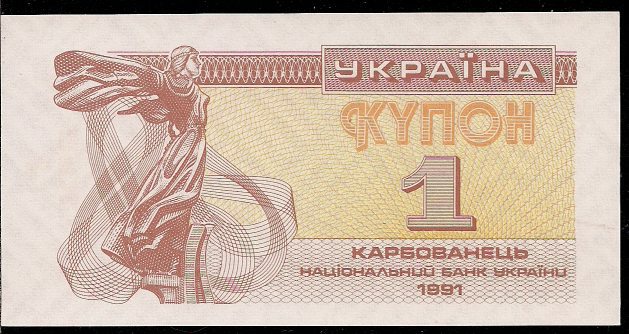
What a wonderful ride we had on the internet superhighway! Nicholas suggested we type "Kynoh" into our search engine and from there we learned about the geography and history of eastern Europe, had a brief introduction to macroeconomics, and learned about exchange rates. We eventually learned that this note was from the Ukraine, it was called a karbovanet, and that it was worth less than a cent before the country changed currencies. We spent most of our morning learning about the other two banknotes too, a dollar from Trinidad and Tobago and a guilder from the Netherlands.
As I prepared lunch, I mentioned to him that our morning was one of the reasons I was so excited to homeschool. If I were still working, he likely wouldn't be in the coin club in the first place, let alone have the time to deep dive into the research we did this morning. I am so thankful for this road we are on.
Tuesday, 30 October 2012
It's gargantuan
We carried our solar system theme into today. My goal today was to help the children understand the size of each of the planets relative to one another, and the vast size of the solar system (or rather, just the part that we know of). Fortunately, we had picked up a fabulous book at the library, 13 Planets: The Latest View of the Solar System, to help me out with that. This was the same book I used to introduce the planets.
At the end of the book, the author (David A. Aguilar) provides instructions of using everyday pantry items to recreate a scale model of the solar system. This afternoon, we gathered up these items and headed outside:
~ grapefruit (we used a small melon): Sun
~ salt: 1 grain for each of Mercury and Mars
~ raw sugar: 1 grain for each of Venus and Earth
~ baking soda: 1 speck for each of Ceres, Pluto, Haumea, Makemake, and Eris
~ cherry tomato: Jupiter
~ grape: Saturn
~ frozen peas: 1 pea for each of Uranus and Neptune
~ orange: for the Sun's next nearest star, Proxima Centauri
~ chalk
~ tape measure

We started out on the corner of our block, then used the measurements from the book to measure out where the planets would be. We got as far as Saturn before we ran out of real estate. And that next-nearest star? With the scale we were using, we would need to go to Halifax!

At the end of the book, the author (David A. Aguilar) provides instructions of using everyday pantry items to recreate a scale model of the solar system. This afternoon, we gathered up these items and headed outside:
~ grapefruit (we used a small melon): Sun
~ salt: 1 grain for each of Mercury and Mars
~ raw sugar: 1 grain for each of Venus and Earth
~ baking soda: 1 speck for each of Ceres, Pluto, Haumea, Makemake, and Eris
~ cherry tomato: Jupiter
~ grape: Saturn
~ frozen peas: 1 pea for each of Uranus and Neptune
~ orange: for the Sun's next nearest star, Proxima Centauri
~ chalk
~ tape measure
We started out on the corner of our block, then used the measurements from the book to measure out where the planets would be. We got as far as Saturn before we ran out of real estate. And that next-nearest star? With the scale we were using, we would need to go to Halifax!
 |
| I'm standing on "Saturn", while the children are standing on "the Sun" at the end of the block! |
Monday, 29 October 2012
I love Mondays
There was a time, not that long ago, when I really didn't want to get out of bed and head off into the "real" world on Mondays. While I loved the idea of spending time with our family on weekends, the reality was that they were fast-paced as we raced to catch up from the week that was. By Sunday evening, we had not caught up, felt further behind, and were drained - not really stuff that would make one bound out of bed on a Monday.
I've noticed that lately, I've really loved our Mondays. While I can't say that we have indeed "caught up" on anything, I've perhaps let go of the illusion. Instead, I know we've taken care of our bodies, minds, and souls when I feel fresh for the week ahead, knowing what awaits us...and accepting of the mess that we will leave behind as we start a new project, or the required logistics as we prepare for a field trip.
Today was a science day. Jaelyn wanted to learn about the solar system, so we did a little reading about the planets in the solar system (there may be 13 now, not the 9 that I remember from my youth - check here for more info about why the number is in flux). Then, we did some art, using pastels and watercolours, to draw and paint our interpretation of the solar system. What I really loved about this was the opportunity to integrate several "subjects" into one lesson - art, reading, writing, math, science - it's all there! I have a few more projects up my sleeve related to the solar system, which I'll share as we complete them.

Later, we worked on building catapults, so that I could prepare for facilitating a group activity at our next homeschool co-op meeting. This included building different designs, building castles, and hurling little felt balls (which we made on the weekend, much to my delight) around our kitchen. We talked about angles, release points, and tension as we fiddled with the designs. We used glue guns and too many elastic bands to count. It was messy, but it was fun. I loved every bit of today!

I've noticed that lately, I've really loved our Mondays. While I can't say that we have indeed "caught up" on anything, I've perhaps let go of the illusion. Instead, I know we've taken care of our bodies, minds, and souls when I feel fresh for the week ahead, knowing what awaits us...and accepting of the mess that we will leave behind as we start a new project, or the required logistics as we prepare for a field trip.
Today was a science day. Jaelyn wanted to learn about the solar system, so we did a little reading about the planets in the solar system (there may be 13 now, not the 9 that I remember from my youth - check here for more info about why the number is in flux). Then, we did some art, using pastels and watercolours, to draw and paint our interpretation of the solar system. What I really loved about this was the opportunity to integrate several "subjects" into one lesson - art, reading, writing, math, science - it's all there! I have a few more projects up my sleeve related to the solar system, which I'll share as we complete them.
Later, we worked on building catapults, so that I could prepare for facilitating a group activity at our next homeschool co-op meeting. This included building different designs, building castles, and hurling little felt balls (which we made on the weekend, much to my delight) around our kitchen. We talked about angles, release points, and tension as we fiddled with the designs. We used glue guns and too many elastic bands to count. It was messy, but it was fun. I loved every bit of today!
Saturday, 1 September 2012
Allowance day
Today is allowance day, and I'm reminded of when my daughter was first learning about money. She was having a difficult time remembering how much different coins were worth, and couldn't remember how many quarters made a dollar. So, we pulled ideas from different teaching methodologies to help her out.
First, I planned an activity based on the Montessori methodology. Jaelyn and I found a quiet corner. I pulled out one of each coin, named it, pointed to the picture on the "tail" of the coin, and the amount. She held each coin and repeated the name an amount. Then, we played a silly little game, where I would ask her to put the coins in different places - say a penny in a shoe, a nickel under a mat, a dime by a door and a quarter on a table. After that, I would ask her to move the coins to different places, in random order. So, she would need to remember the name of the coin and where she put it. Once we had ran out of places to put coins, we huddled together again and I asked her to name each coin for me. This stuck.
To help her learn the number of quarters to make a dollar, I turned to the Waldorf methodology. I thought that if I could make up a story that would be relevant and interesting, it might click for her. I remember laying awake in bed one night coming up with this story. When it was allowance day, I gathered up four quarters and a dollar, as used them as props. To understand the story, it might help to understand what our coins look like. A quarter has a caribou on it, and our dollar is a gold-coloured coin.
Once upon a time, there was a lone caribou herder living far north in the frozen tundra. He had a herd of 25 caribou (point to the caribou and the number 25 on the coin). He would always make sure that his herd had enough to eat, so he was always needing to wander the north looking for more food. Because he was always moving to different places, it was hard to make friends.
But one day, as he was moving his herd, he met another caribou herder! They were both glad to meet someone else! They chatted for awhile and really enjoyed one another's company. The second caribou herder had 25 caribou in his herd too (point to the caribou and the number 25 on the coin). The first caribou herder said, "Would you like to travel with me? I've been so lonely and I really like having someone else to talk to." The second caribou herder agreed, and the first herd of 25 and the second herd of 25 became 50 (bring the two coins together into one hand, representing that they are the same herd).
The two caribou herders and their herd of 50 roamed the tundra, and as they roamed, they talked and shared stories. One day, they met another caribou herder! He had 25 caribou in his herd (point to the caribou and the number 25 on the coin). He was moving his herd to a place that only his family knew about, because there was much for the herd to eat there. He invited the other two caribou herders to join him, for he liked their company. So the 50 caribou joined the 25 caribou and they became a larger herd of 75 (bring the three coins together in one hand).
The 3 caribou herders and their herd of 75 followed inuktuks (rock formations laid by Inuit people) until they came to a valley that had enough food for the herd. They lingered in this spot for many days, and the three caribou herders told stories by the fire and laughed lots. They enjoyed being together. Eventually, the caribou needed to move on to more food, so they packed up camp and set out to find more food. As they came out of the valley, the met a fourth caribou herder, and he too had a herd of 25 (point to the caribou and the number on the coin). When he heard about how the caribou herders helped one another, he asked to join them. And they agreed heartily. The 25 caribou joined the 75 caribou and they became one large herd of 100 caribou.
Eventually, the Queen heard the story of the 4 caribou herders who helped each other out, and their herd of 100 caribou. She asked to meet them. When they met, she gave each of them a gold coin (show the gold coin) to celebrate how they shared and helped one another. She told them, `The gold coin is worth 100 cents - 1 cent for every caribou in your herd. But 100 cents sounds funny, so when you hold this coin, you can also call it 1 dollar.
The end.
I haven`t told that story to Jaelyn for some time. I was reminded of it today, though, so I asked her to retell it, just to see what she remembered. Here`s what she told me:
And the other one said, "Sure". And then they had 50 caribou.
And they were walking along and the caribou were eating and then another caribou herder came along. And so they said, "How about we get together?"
And the other one said, "Sure". So they went together and he also said, `I know where to go to get food for our caribou`. So they went along. There were 75 caribou in their herd.
And so they were eating and walking along and then another caribou herder came along. And so they all three said, `how about you come with us? We know where to go.`
So he said, `Sure I'll come along`. And how many caribou were in the herd? 100.
Then the queen called them over and they came over and she said, "Because you were being so generous by letting people into the herd, and you have lots of caribou and were sharing, you deserve having a gold coin, which is a dollar. Instead of saying 100 cents, you can call it a dollar."
The end.
First, I planned an activity based on the Montessori methodology. Jaelyn and I found a quiet corner. I pulled out one of each coin, named it, pointed to the picture on the "tail" of the coin, and the amount. She held each coin and repeated the name an amount. Then, we played a silly little game, where I would ask her to put the coins in different places - say a penny in a shoe, a nickel under a mat, a dime by a door and a quarter on a table. After that, I would ask her to move the coins to different places, in random order. So, she would need to remember the name of the coin and where she put it. Once we had ran out of places to put coins, we huddled together again and I asked her to name each coin for me. This stuck.
To help her learn the number of quarters to make a dollar, I turned to the Waldorf methodology. I thought that if I could make up a story that would be relevant and interesting, it might click for her. I remember laying awake in bed one night coming up with this story. When it was allowance day, I gathered up four quarters and a dollar, as used them as props. To understand the story, it might help to understand what our coins look like. A quarter has a caribou on it, and our dollar is a gold-coloured coin.
The Four Caribou Herders, original version
Once upon a time, there was a lone caribou herder living far north in the frozen tundra. He had a herd of 25 caribou (point to the caribou and the number 25 on the coin). He would always make sure that his herd had enough to eat, so he was always needing to wander the north looking for more food. Because he was always moving to different places, it was hard to make friends.
But one day, as he was moving his herd, he met another caribou herder! They were both glad to meet someone else! They chatted for awhile and really enjoyed one another's company. The second caribou herder had 25 caribou in his herd too (point to the caribou and the number 25 on the coin). The first caribou herder said, "Would you like to travel with me? I've been so lonely and I really like having someone else to talk to." The second caribou herder agreed, and the first herd of 25 and the second herd of 25 became 50 (bring the two coins together into one hand, representing that they are the same herd).
The two caribou herders and their herd of 50 roamed the tundra, and as they roamed, they talked and shared stories. One day, they met another caribou herder! He had 25 caribou in his herd (point to the caribou and the number 25 on the coin). He was moving his herd to a place that only his family knew about, because there was much for the herd to eat there. He invited the other two caribou herders to join him, for he liked their company. So the 50 caribou joined the 25 caribou and they became a larger herd of 75 (bring the three coins together in one hand).
The 3 caribou herders and their herd of 75 followed inuktuks (rock formations laid by Inuit people) until they came to a valley that had enough food for the herd. They lingered in this spot for many days, and the three caribou herders told stories by the fire and laughed lots. They enjoyed being together. Eventually, the caribou needed to move on to more food, so they packed up camp and set out to find more food. As they came out of the valley, the met a fourth caribou herder, and he too had a herd of 25 (point to the caribou and the number on the coin). When he heard about how the caribou herders helped one another, he asked to join them. And they agreed heartily. The 25 caribou joined the 75 caribou and they became one large herd of 100 caribou.
Eventually, the Queen heard the story of the 4 caribou herders who helped each other out, and their herd of 100 caribou. She asked to meet them. When they met, she gave each of them a gold coin (show the gold coin) to celebrate how they shared and helped one another. She told them, `The gold coin is worth 100 cents - 1 cent for every caribou in your herd. But 100 cents sounds funny, so when you hold this coin, you can also call it 1 dollar.
The end.
I haven`t told that story to Jaelyn for some time. I was reminded of it today, though, so I asked her to retell it, just to see what she remembered. Here`s what she told me:
The Four Caribou Herders, as retold by Jaelyn
Once there was a caribou herder going along. There were 25 caribou in his herd. He was walking along and he found another caribou herder. And then they started talking and one said, "Why don't we go together."And the other one said, "Sure". And then they had 50 caribou.
And they were walking along and the caribou were eating and then another caribou herder came along. And so they said, "How about we get together?"
And the other one said, "Sure". So they went together and he also said, `I know where to go to get food for our caribou`. So they went along. There were 75 caribou in their herd.
And so they were eating and walking along and then another caribou herder came along. And so they all three said, `how about you come with us? We know where to go.`
So he said, `Sure I'll come along`. And how many caribou were in the herd? 100.
Then the queen called them over and they came over and she said, "Because you were being so generous by letting people into the herd, and you have lots of caribou and were sharing, you deserve having a gold coin, which is a dollar. Instead of saying 100 cents, you can call it a dollar."
The end.
Tuesday, 31 July 2012
Club Day. The Birds of Prey version. Volume 1, Issue 3
Today was a rousing success, at least in my opinion. Today, the Birds of Prey Club made kites. They didn't fly worth a hoot, but it gave us a wonderful opportunity to look at the design we used and think about the modifications we would make so that the next time out, they would soar in the wind. And we had to do some division, measurement, and learned a wee bit about geometry.
Our design was based on the instructions from How to Make and Eagle Kite, which seemed a fitting type of kite for the club to make. All of us along the way make some tweaks:


Here's what we talked about that we would do differently next time:
Looking forward to our last Birds of Prey Club meeting of the summer!
Our design was based on the instructions from How to Make and Eagle Kite, which seemed a fitting type of kite for the club to make. All of us along the way make some tweaks:
- My husband and I made the frames in advance, and we used simple hardwood dowels from the hardware store instead of bamboo.
- We decided to affix the plastic bag to our frame using both masking tape and glue. This was decided when it seemed that we would have to hold the plastic in place for a while, and we just didn't have the time or patience for that.
- The boys designed the heads, wings and tails freestyle - they didn't care to simply attach triangles to the kite - they wanted to make wings that looked like wings and tails that looked like tails. And the heads had to be detailed. We had two bald eagles and a great horned owl in the end. These were attached with glue and invisible tape.
- We may not have been exact on our measurements when we spaced the ribbon sections on the kite tail.


Here's what we talked about that we would do differently next time:
- We would make the ribbon sections longer so they would be easier to tie on. We would also double-knot the ribbons to the tail so they would stay on.
- We would make sure that we didn't skimp on the ribbons on the tail.
- We would make sure the string ball was tied tightly to the bridle.
- We ran into our neighbour, Pierre, as we were leaving the park. It turns out Pierre has built many a kite in his day. He suggested we add an anchor on either side of the short dowel to help the kite stay level.
Looking forward to our last Birds of Prey Club meeting of the summer!
Monday, 16 July 2012
Intro to fractions
Yesterday, when my daughter and I were making a Brownie in a Jar recipe for her friend's birthday, I let her take a go at reading the recipe. There were fractions in it, and she wasn't sure how to read them, and she didn't really know what they were either. But she was happy to know how to read "sugar" and "cup", and that there were chocolate chips in it and a party to head off to soon.
I felt like it was a missed opportunity. Sure, kids in our school division don't start learning about fractions until grade 3. But she's going to be seeing them every time that we make a recipe or measure something. So, how could I help her understand what those numbers and lines meant, in a way she would understand? I was laying awake last night pondering that. It had to be quick, easy, short on long words like "numerator" and "denominator", and hands on. Here's what I came up with.
First, we got a blank piece of paper. I wrote down a couple of numbers that we saw in the recipe and asked her if she remembered them. She did. I asked her if she understood what they meant and she said she didn't. So, I went to the classic pie example. We talked about the bottom number first. It told us how many pieces were going to be in the pie. I drew a picture to illustrate the first fraction I wrote. Then we talked about the top number. It told us how many pieces we would get. I coloured the pieces in on my drawing. We went to the next fraction and I asked her to show me what the bottom number meant. Then what the top number meant. She got it quickly, and then cut the pies into many pieces and coloured them all, saying she wanted to share the pieces with her family.
So then we went back to the recipe. I told her that instead of a pie, we would now use the measuring cups and see if it really worked. We took a 1/4 cup and a liquid measuring cup. I showed her the number on the 1/4 cup and asked her how many she thought we would need to fill the full 1 cup. She told me 4. And then we tried it out, just to check. And sure enough, she was right! We did the same thing using a 1/3 cup, and it worked again.
She doesn't know they were called fractions. She didn't hear the words "numerator" and "denominator". But she remembers that we did an experiment, and what the outcome was. That's what will matter for today.
I felt like it was a missed opportunity. Sure, kids in our school division don't start learning about fractions until grade 3. But she's going to be seeing them every time that we make a recipe or measure something. So, how could I help her understand what those numbers and lines meant, in a way she would understand? I was laying awake last night pondering that. It had to be quick, easy, short on long words like "numerator" and "denominator", and hands on. Here's what I came up with.
First, we got a blank piece of paper. I wrote down a couple of numbers that we saw in the recipe and asked her if she remembered them. She did. I asked her if she understood what they meant and she said she didn't. So, I went to the classic pie example. We talked about the bottom number first. It told us how many pieces were going to be in the pie. I drew a picture to illustrate the first fraction I wrote. Then we talked about the top number. It told us how many pieces we would get. I coloured the pieces in on my drawing. We went to the next fraction and I asked her to show me what the bottom number meant. Then what the top number meant. She got it quickly, and then cut the pies into many pieces and coloured them all, saying she wanted to share the pieces with her family.
So then we went back to the recipe. I told her that instead of a pie, we would now use the measuring cups and see if it really worked. We took a 1/4 cup and a liquid measuring cup. I showed her the number on the 1/4 cup and asked her how many she thought we would need to fill the full 1 cup. She told me 4. And then we tried it out, just to check. And sure enough, she was right! We did the same thing using a 1/3 cup, and it worked again.
She doesn't know they were called fractions. She didn't hear the words "numerator" and "denominator". But she remembers that we did an experiment, and what the outcome was. That's what will matter for today.
Friday, 29 June 2012
And we're off!
Most of the mess has been put away (thanks kidlets!). Most of the
angst and self-doubt has been written about. We've now swept that
behind us and are on our way!
Our morning started with my son making breakfast for us - chocolate chip pancakes! It moved on to playhouse building, with the children measuring, cutting, hammering, and getting tuckered out in the sweltering sun. So, we enjoyed a change of scenery with a trip to the (air-conditioned) library. My daughter got her own library card, we picked out some good books, and headed for home. Some reading, skipping through the sprinkler, and hammering later, we've got the floor and one wall built in the first day of our first project!


Our playhouse project is peppered with opportunities for our children to apply their math skills, and also develop skills that use their hands. Much of the hands-on work seems more up my son's alley, likely because he finds the work less difficult than his sister does. But that will change, I'm sure. Once the playhouse is built, the children will use their creativity in painting the exterior. They've also talked about making different kinds of signs to hang up, and talked about different ways to make them easily adjustable, depending on their mood or the game they're playing. We're excited that they will have a handy place to play when their baby sister is having her afternoon nap. There's already talk of reading in the shade of the playhouse's porch.
I'm looking forward to the rest of the playhouse taking shape over the days to come! Stay tuned!
Our morning started with my son making breakfast for us - chocolate chip pancakes! It moved on to playhouse building, with the children measuring, cutting, hammering, and getting tuckered out in the sweltering sun. So, we enjoyed a change of scenery with a trip to the (air-conditioned) library. My daughter got her own library card, we picked out some good books, and headed for home. Some reading, skipping through the sprinkler, and hammering later, we've got the floor and one wall built in the first day of our first project!


Our playhouse project is peppered with opportunities for our children to apply their math skills, and also develop skills that use their hands. Much of the hands-on work seems more up my son's alley, likely because he finds the work less difficult than his sister does. But that will change, I'm sure. Once the playhouse is built, the children will use their creativity in painting the exterior. They've also talked about making different kinds of signs to hang up, and talked about different ways to make them easily adjustable, depending on their mood or the game they're playing. We're excited that they will have a handy place to play when their baby sister is having her afternoon nap. There's already talk of reading in the shade of the playhouse's porch.
I'm looking forward to the rest of the playhouse taking shape over the days to come! Stay tuned!
Friday, 22 June 2012
Grade 1 math...our style
I was privileged to enjoy my daughter's company as we sat in the stands for our favorite CFL football team's preseason game tonight. All was exciting and fun for the first quarter, and then my 6 year old lost interest. To bring her back every now and again, we did math. This is right up her alley. She's the one who wanted to do math worksheets when we were on summer vacation last year. She likes doing math problems when we do dishes together. It keeps her happy and somewhat engaged, so we do it.
First, we practiced number recognition. I'd ask her the number of the player who caught the ball, kicked a field goal, made a tackle, or was on the big screen for posterity's sake. Soon, she was volunteering this information on her own.
As the game went on, we'd do some adding when points were scored. We tried to finish our adding before the announcer volunteered the score for us. And, if he beat us, then we'd do some subtraction by figuring out how many points we were up or down.
And the game was great too. Here's to a great season - go Riders!
First, we practiced number recognition. I'd ask her the number of the player who caught the ball, kicked a field goal, made a tackle, or was on the big screen for posterity's sake. Soon, she was volunteering this information on her own.
As the game went on, we'd do some adding when points were scored. We tried to finish our adding before the announcer volunteered the score for us. And, if he beat us, then we'd do some subtraction by figuring out how many points we were up or down.
And the game was great too. Here's to a great season - go Riders!
Subscribe to:
Posts (Atom)